

It reflects the actual cash flow, distinguishing it from accounting profits shown on the income statement. Master the fundamentals of financial accounting with our Accounting for Financial Analysts Course. This comprehensive program offers over 16 hours of expert-led video tutorials, guiding you through the preparation and analysis of income statements, balance sheets, and cash flow statements.
A Comparison Table of Each Metric (Completing the CF Guide)
A company’s EV/EBITDA ratio is found by dividing its enterprise value by its EBITDA. For example, companies with significant capital assets will show higher EBITDA by excluding large depreciation expenses, yet those assets still require eventual replacement. Avoid judging a ratio alone; combine https://amenair.muhammadworks.com/is-accounting-hard-challenges-of-becoming-an/ with other ratios (e.g., current ratio + quick ratio + cash flow). Of course, this is just one metric that you should be thinking about — definitely not a metric that can tell you if you should buy or sell a stock on its own.
- The cash flow formula is one of the most important methods for achieving a company’s financial goals.
- All these tasks can obviously be done by hand using software such as Excel.
- It is also any money spent on the production of goods, or any expenses related to business operations.
- Small businesses can provide investors with their cash flow statements to show how much money they can generate.
- We can further break down non-cash expenses into simply the sum of all items listed on the income statement that do not affect cash.
Decision-making and financial planning
- The Cash Flow Statement, or Statement of Cash Flows, summarizes a company’s inflow and outflow of cash, meaning where a business’s money came from (cash receipts) and where it went (cash paid).
- Take your analysis skills to the next level with CFI’s Financial Ratios Definitive Guide.
- It provides the closing cash balance of the firm after deducting all money outflows from money inflows.
- Operating activities cash flow is net cash generated from a company’s normal operating business activities, flowing to net income.
- It is the net cash flow generated by ongoing business activities, while investments and financing are excluded.
- Debt Service Coverage formulas and adjustments will vary based on the financial institution that’s calculating the ratio as well as the context of the borrowing request.
For example, if a construction company purchases a new bulldozer, the payment for this vehicle counts as an investing cash outflow. The cash the eventual sale creates when the company is done with it is a cash inflow. Let’s say company B earns £15,000 in cash inflow in a certain period yet spends £20,000 in order to invest in developing its products and hiring crucial skilled labour.
What are the main types of financial ratios?
If the car (business) stops, cash flow meaning no progress is made, potentially halting operations or cash-driven activities. With Agicap, you can also forecast your cash flows over 1, 3, 6 or 12 months or more, to make the right decisions and secure your financing requirements. You can easily simulate the impact of crisis scenarios on your cash position such as a drop in sales, short-time working, deferred loan repayments, etc.
What is a Cash Flow Statement?
Cash flow analysis enables businesses to make informed decisions about financing, budgeting, capital expenditures, and overall financial management. While revenue is an important indicator of a business’s sales performance, cash flow provides a more comprehensive view of the business’s liquidity and financial health. Cash flow considers both revenue and the timing and nature of cash inflows and outflows, allowing businesses to assess their ability to meet financial obligations, manage expenses, and invest in growth. Understanding the distinction between fund flow and revenue is crucial for financial analysis and decision-making within a business. Operating cash flow is an important component when it comes to understanding a company’s cash flow. It is the net cash flow generated by ongoing business activities, while investments and financing are excluded.
- Comparing financial ratios with competitors or industry benchmarks helps analysts to determine a company’s relative performance.
- Operating flow represents the cash generated or consumed by a company’s core business activities.
- However, it does help to have a rainy-day fund to pay for any unforeseen expenses.
- However, the income statement breaks down the $1,000 expense over 24 months.
- Profit is indicative of a company’s financial health, highlighting its stability and sustainability.
Cash Flow Management for Different Entities
Derived from revenue generated by core business operations and reduced by various expenses. Negative fund flow, on the other hand, occurs when the outflows of cash surpass the inflows, leading to a shortage of available cash. It can indicate financial challenges and the need for adjustments to improve cash inflows, reduce expenses, or secure additional financing.
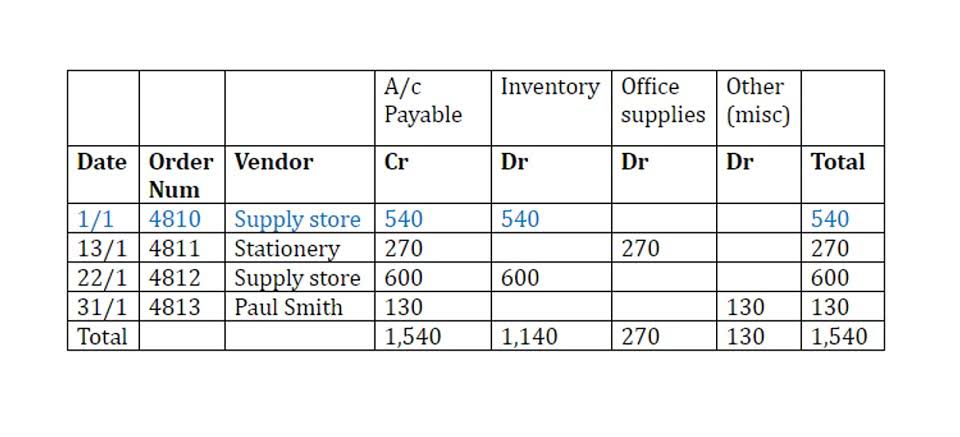
The owners will also need to examine whether prices can be increased or costs reduced in order to begin generating a profit. If it is not possible to do so, then the business should be sold off or Purchases Journal shut down. Operating cash flow (CFO) includes cash from core business activities that involve the sale or production of your goods or services. Examples include customer payments for products, payroll, and inventory purchases. The same could be true in reverse, as cash flows don’t always affect your profit. For example, paying off your entire debt early could be a considerable cash outflow that lowers your balance.
Step 1: Forecast NTM Revenue
The statement usually breaks down the cash flow into three categories including Operating, Investing and Financing activities. A simplified and less formal statement might only show cash in and cash out along with the beginning and ending cash for each period. One option is to adjust prices upward on goods that are in high demand or for which there are no competing products, since this increases the profit and cash flow generated from each sale. Another option is to concentrate purchases with a smaller number of suppliers, if doing so qualifies the company for volume purchase discounts.

Download CFI’s Free Net Present Value (NPV) Template

The more cash coming into your business, the more you can allocate to your business operations or reinvesting. Therefore, your incoming cash of $7,060 minus the outgoing cash of $4,500 leaves you with $2,560 of positive cash flow. These sales are recorded as revenue and refer to the cash flowing into a company. Operating cycle is the time taken to convert cash into inventory, inventory into sales, sales into receivables, and receivables back into cash (concept). Shorter operating cycle usually means less working capital requirement. Calculating the changes in non-cash net working capital is typically the most complicated step in deriving the FCF Formula, especially if the company has a complex balance sheet.
No responses yet